Conversion rate optimization (CRO) is the practice of increasing the percentage of website visitors who take a desired action — like making a purchase, filling out a form, signing up for a trial, or clicking a call-to-action button.
Instead of spending more money driving traffic to your site, CRO focuses on getting more value from the visitors you already have. It combines data analysis, user behavior insights, and systematic testing to remove friction, improve messaging, and guide visitors toward action.
Here's the simplest way to think about it: if 1,000 people visit your pricing page and 20 sign up, your conversion rate is 2%. CRO is the discipline of turning that 2% into 3%, 4%, or higher — without increasing your ad spend by a single dollar.
CRO sits at the intersection of marketing, UX design, and data science. But you don't need to be an expert in all three to get started. You just need a structured approach and the willingness to test your assumptions.
Most companies pour budget into acquisition — ads, SEO, partnerships — while ignoring the conversion side of the equation. That's like filling a leaky bucket with more water instead of patching the hole.
Here's why CRO deserves your attention:
The ROI is hard to ignore. According to MarketingLTB research, companies that dedicate more than 5% of their marketing budget to CRO see 4x higher conversion lifts compared to those that don't. And marketers who prioritize CRO are 3.5x more likely to report year-over-year revenue growth.
Small gains compound fast. If your site converts at 2% and you improve it to 3%, that's a 50% increase in customers — from the same traffic. Double your conversion rate from 1% to 2%, and you've doubled your revenue without spending an extra cent on acquisition.
Most visitors don't convert. Data from Blogging Wizard shows the global average website conversion rate hovers around 2.5–3%. That means 97% of your visitors leave without taking action. Even modest improvements unlock significant revenue.
Acquisition keeps getting more expensive. Ad costs rise every year. SEO takes months. CRO is the lever that compounds on top of every traffic source you already have. Every channel — paid, organic, email, referral — benefits when your pages convert better.
As Peep Laja, founder of CXL and one of the most recognized voices in CRO, puts it: "Optimization is about the intersection of customer psychology and data. You need both."
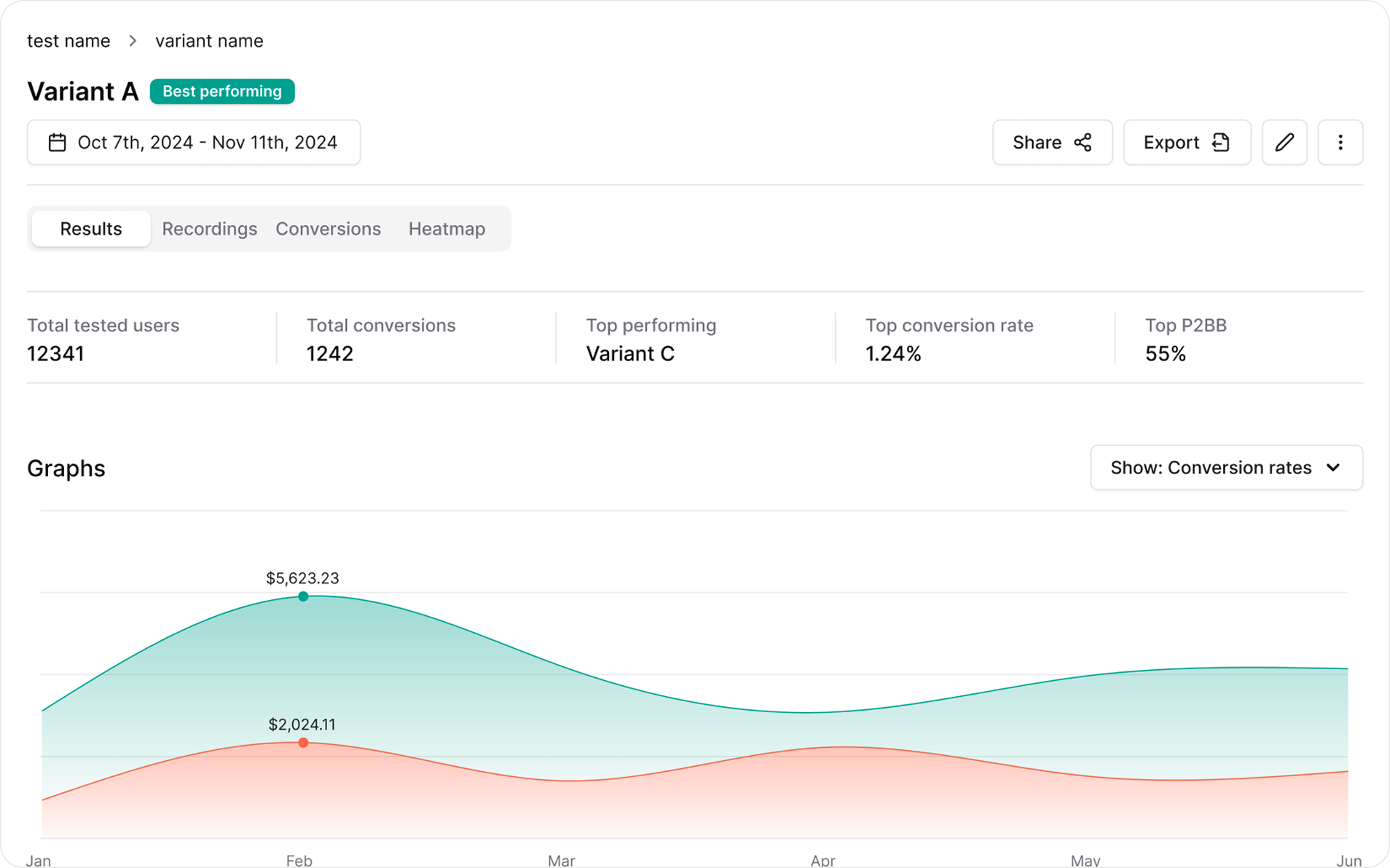
Consider Memberstack, which attributed a $500K revenue increase to conversion experiments. Or Physitrack, which saw a 42% increase in marketing opt-ins through targeted A/B testing. These aren't outliers — they're what happens when you take CRO seriously.
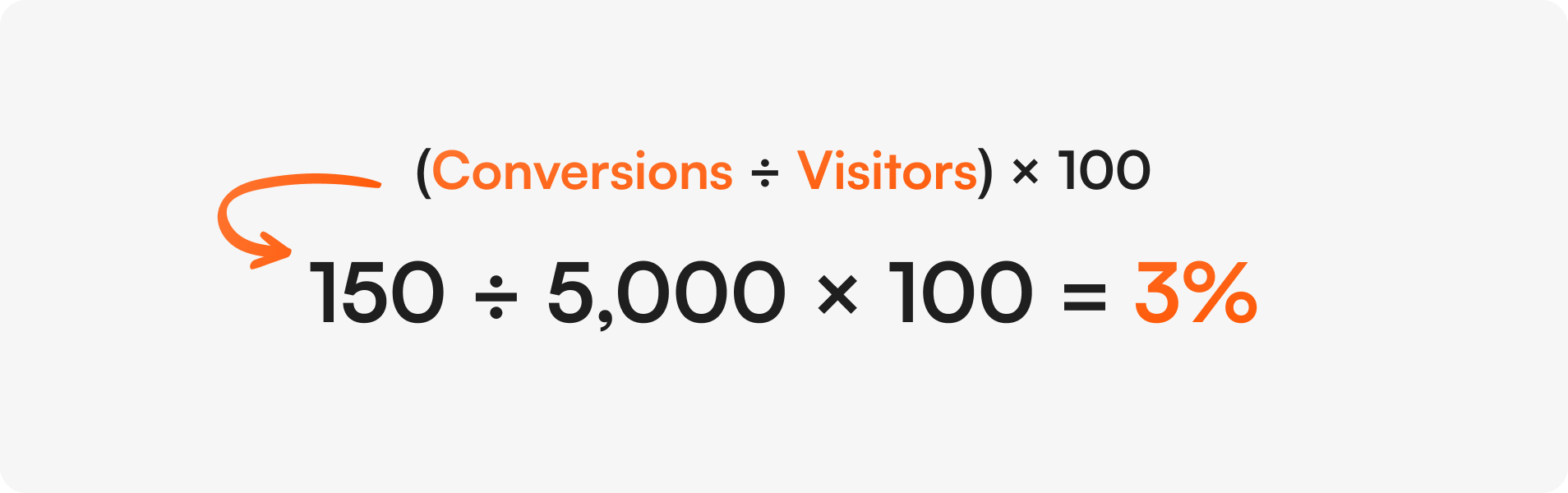
Before you can optimize, you need to measure. The conversion rate formula is straightforward:
Conversion Rate = (Number of Conversions / Total Visitors) x 100
If your landing page gets 5,000 visitors in a month and 150 of them fill out your demo request form, your conversion rate is:
(150 / 5,000) x 100 = 3%
A few things to keep in mind:
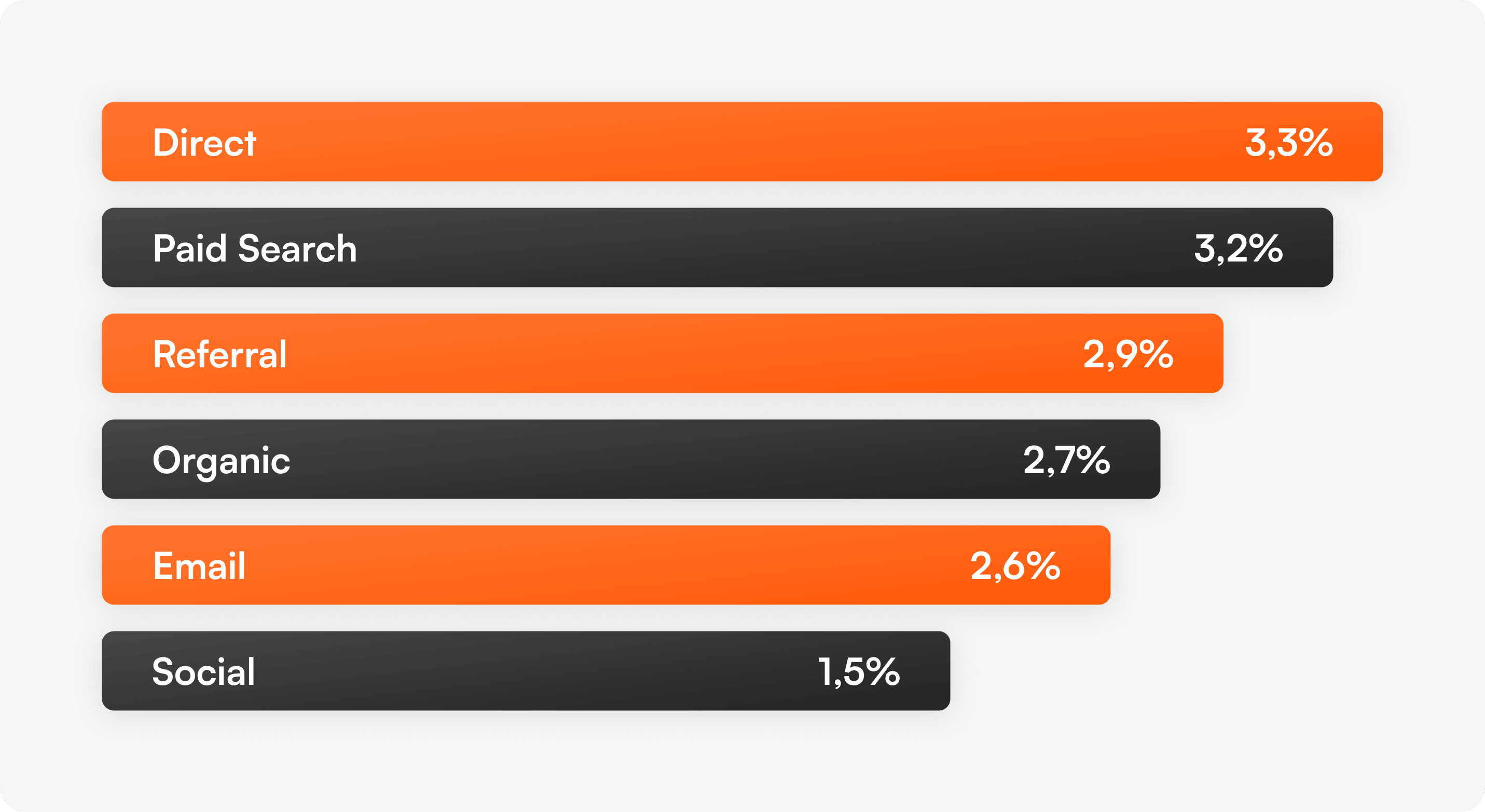
"What's a good conversion rate?" is the most common CRO question — and the answer is always "it depends." But benchmarks give you a useful starting point.
Sources: Ruler Analytics, SerpSculpt
Sources: Statsig, Red Stag Fulfillment
Source: Blogging Wizard / FirstPageSage
Here's the key takeaway: don't obsess over hitting a benchmark. Focus on improving your rate consistently. A SaaS company converting at 2% that improves to 3% has made a bigger business impact than one that's been sitting at 5% for two years.
CRO isn't about random changes. It's a repeatable process. Here's the framework that works, whether you're testing your first headline or running your hundredth experiment.
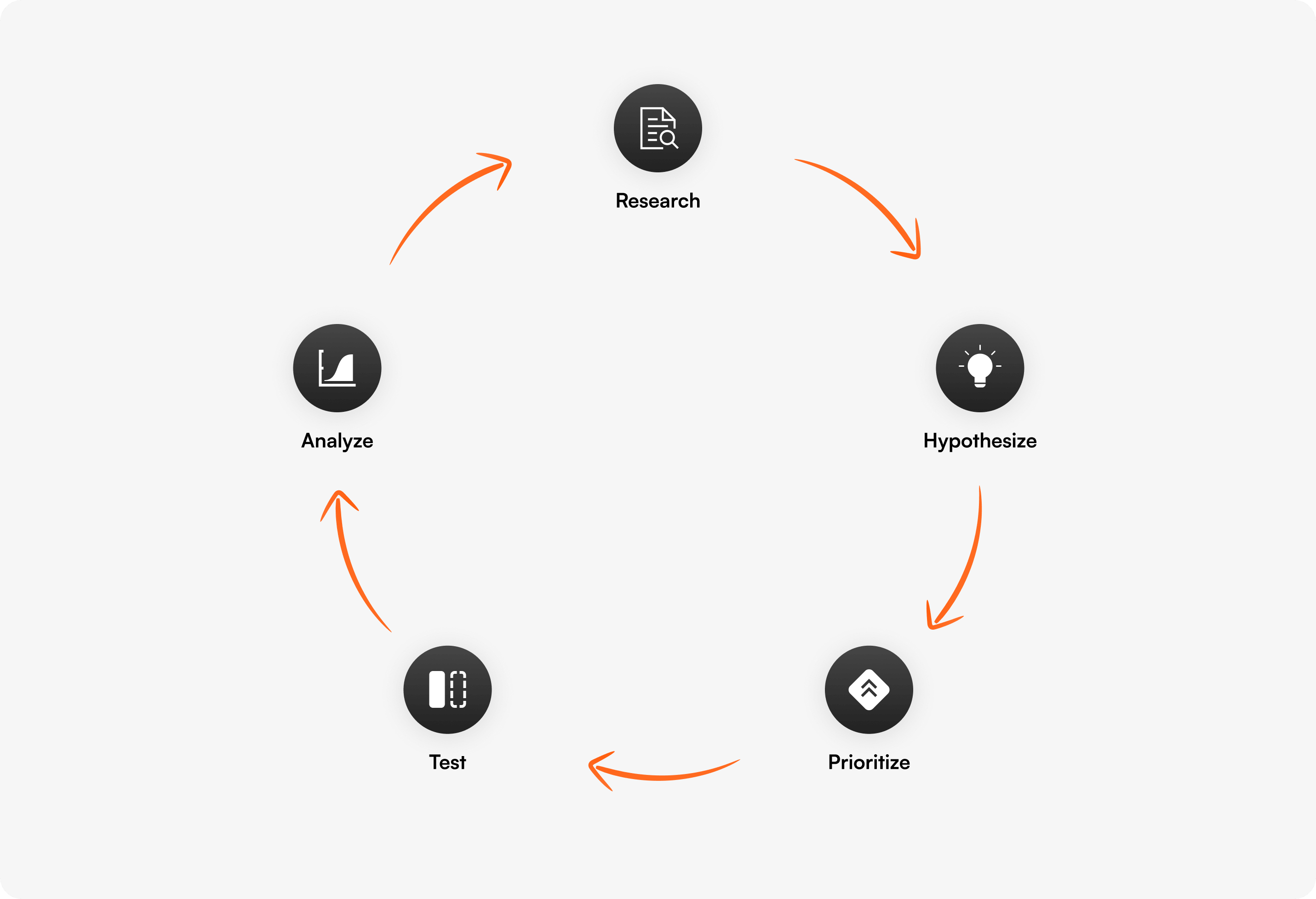
Before you change anything, understand where and why visitors drop off.
Quantitative data tells you what is happening:
Qualitative data tells you why:
As Craig Sullivan, a veteran CRO consultant, often emphasizes: "You are not your user. Your opinions about what works are hypotheses, not facts. Let the data decide."
The goal of research isn't to confirm what you already believe. It's to surface problems you didn't know existed.
A good CRO hypothesis follows a simple structure:
"If we [change], then [metric] will [improve/increase] because [reason based on research]."
For example:
The "because" is critical. It connects your proposed change to actual evidence — not a hunch.
You'll generate more ideas than you can test. Use a prioritization framework to focus on the highest-impact experiments first.
The ICE framework is a good starting point:
Score each idea, then rank by total. High-impact, high-confidence, easy-to-execute tests go first.
Another approach is the PIE framework (Potential, Importance, Ease), which weights page importance — a 1% improvement on a high-traffic page matters more than a 5% improvement on a page nobody visits.
This is where you validate your hypothesis through controlled experiments.
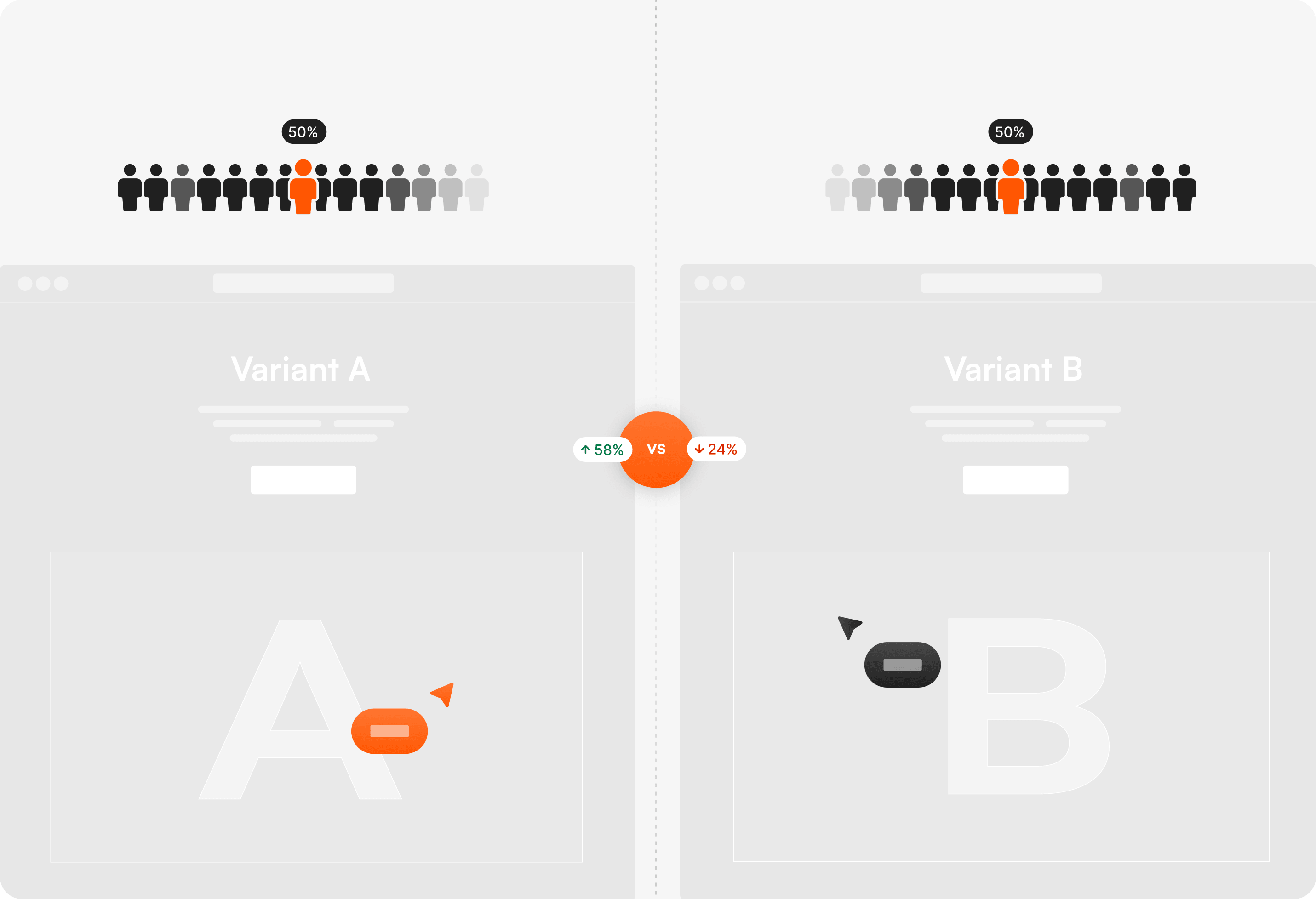
A/B testing is the most common method: show 50% of your visitors the original page (control) and 50% a modified version (variant), then compare which performs better against your target metric.
A few testing fundamentals:
After the test concludes:
The best CRO programs aren't defined by any single test. They're defined by the velocity and quality of their testing cycles.
Not all pages and elements are created equal. Focus your optimization efforts where they'll have the biggest impact.
Your headline is the first thing visitors read. If it doesn't communicate value in seconds, they bounce. Test different headlines that speak to specific outcomes rather than features.
What to test:
Your CTA is where intention turns into action. A weak CTA loses visitors at the finish line. Optimize your CTAs by testing:
Your landing pages are purpose-built for conversion. Every element should move visitors toward one action. Test:
Forms are often the final barrier between a visitor and a conversion. Even small changes to form design can have outsized impact:
Confusing navigation kills conversions silently. Test your navigation to ensure visitors can find what they need without friction:
Your pricing page is one of the highest-intent pages on your site. Test:
More than half of web traffic is mobile, and mobile optimization is often an afterthought. Test:
You don't need a dozen tools to start. But you do need the right capabilities. Here's what a solid CRO toolkit covers:
The backbone of CRO. A/B testing tools let you create variants of your pages and measure which performs better. Look for a platform that fits your stack and growth stage — one that's easy to set up, doesn't slow down your site, and gives you reliable statistical results.
If your site runs on Webflow or WordPress, tools like Optibase let you set up and run experiments without code — directly inside your existing workflow.
Heatmaps show you where visitors click, how far they scroll, and which elements get attention. They turn raw analytics data into visual insights you can act on. Use them to identify:
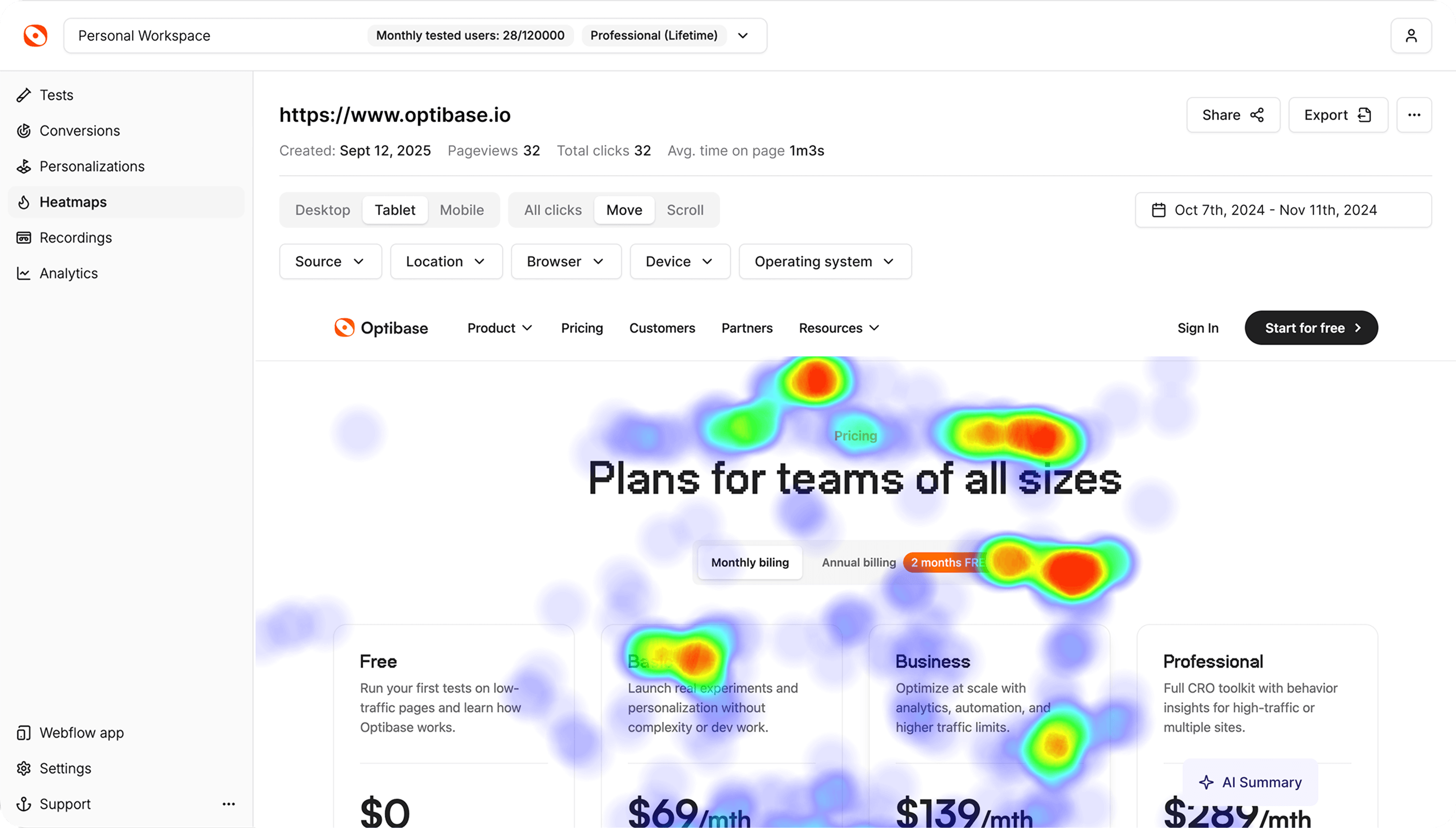
Session recordings let you watch how real visitors navigate your site. You'll spot hesitation patterns, rage clicks, form abandonment, and navigation confusion that numbers alone can't reveal.
Sometimes the best way to find out why visitors don't convert is to ask them. On-page surveys, exit-intent polls, and post-purchase surveys provide qualitative context that makes your quantitative data actionable.
Your analytics platform (GA4, Mixpanel, or similar) is the foundation. Use it to identify which pages have the highest traffic and lowest conversion — those are your optimization priorities.
CRO is widely misunderstood. Here are the most common misconceptions — and why they're wrong.
A/B testing is one technique within CRO, but CRO also includes user research, funnel analysis, personalization, UX improvements, and strategic changes to messaging. Testing without research is just guessing with extra steps.
High traffic makes testing faster, but CRO isn't only about running A/B tests. With lower traffic, you can still analyze user behavior through heatmaps and session recordings, run qualitative research, make evidence-based UX improvements, and test on high-traffic pages first.
"Move the CTA above the fold" and "use a green button" are not CRO strategies. Best practices are starting hypotheses at most. What works for one audience on one site may fail on another. Test your assumptions — don't copy someone else's playbook blindly.
Every website with a goal benefits from CRO — SaaS signups, lead generation, content engagement, app downloads, demo requests. If you have a desired action, you have something to optimize.
A test that produces a "winner" but was run on insufficient traffic, stopped too early, or measured the wrong metric is worse than no test at all. Statistical rigor matters.
CRO is a continuous process, not a checklist. User behavior changes, markets shift, and your product evolves. The companies that see the greatest returns from CRO treat it as an ongoing discipline — running iterative testing cycles month after month.
Changing 15 things at once doesn't give you 15x the improvement. It gives you zero insight into what actually worked. Start with high-impact, isolated changes. Build your understanding of what moves the needle for your specific audience before you scale up complexity.
The CRO principles are universal, but the application varies based on your business model.
SaaS CRO typically focuses on:
E-commerce CRO centers on:
B2B CRO is about:
If you're starting from zero, here's a practical roadmap to get moving:
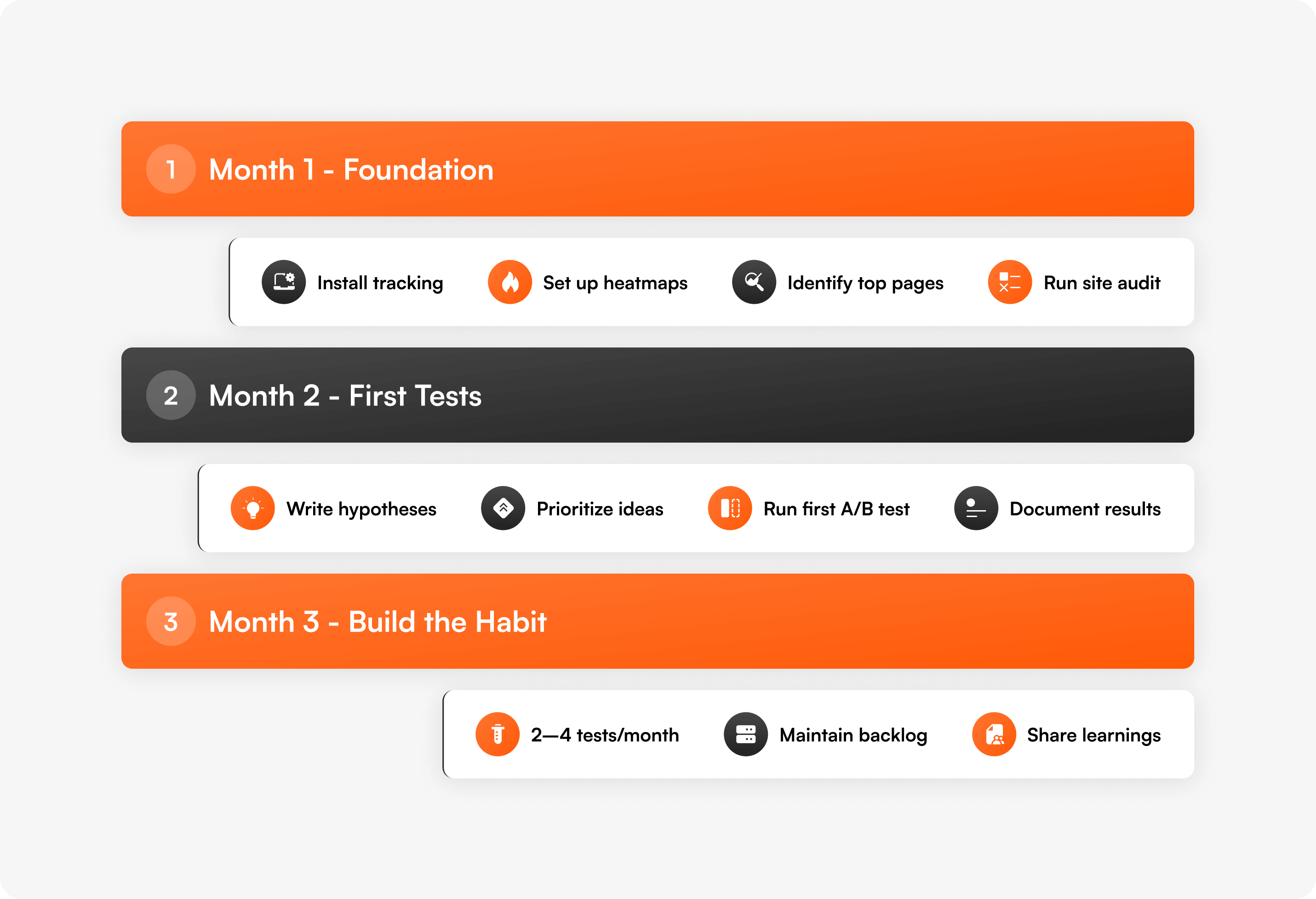
According to ElectroIQ research, companies that run 10+ tests per month grow 2.1x faster than those that don't test regularly. You don't need to start there, but consistent iteration is what separates teams that see results from those that don't.
CRO doesn't exist in a vacuum. It amplifies every other channel.
CRO + SEO: Organic traffic is only valuable if it converts. CRO and SEO work together — optimize your pages for both search engines and the humans who land on them.
CRO + Paid Ads: Every percentage point improvement in conversion rate directly reduces your cost per acquisition. A page that converts 2x better means your ad budget goes 2x further.
CRO + Email Marketing: The same testing principles that work on landing pages apply to emails — subject lines, copy, CTAs, and send times all benefit from systematic experimentation.
CRO + UX Design: CRO provides the data that validates (or invalidates) design decisions. Design and data together produce better outcomes than either alone.
CRO stands for conversion rate optimization. In marketing, it refers to the systematic process of increasing the percentage of website visitors who complete a desired action — such as making a purchase, signing up for a trial, or requesting a demo. CRO uses data analysis, user research, and testing (primarily A/B testing) to improve marketing performance without increasing traffic spend.
A/B testing is one technique used within CRO. CRO is the broader discipline that includes research, hypothesis development, prioritization, testing, and analysis. Think of it this way: A/B testing is a tool. CRO is the strategy for using that tool effectively. Learn more in our A/B testing beginner's guide.
It depends on your industry, business model, and what you're measuring. The global average is 2.5-3%, but rates vary widely — from 1.2% in luxury e-commerce to 7.4% in B2B legal services. Rather than chasing a specific number, focus on improving your own rate consistently over time.
Individual A/B tests typically need 2-4 weeks to reach statistical significance, depending on your traffic volume. But the real value of CRO emerges over months — as you accumulate learnings, build better hypotheses, and compound improvements across your site.
Not necessarily. While A/B testing works best with higher traffic volumes (to reach statistical significance faster), CRO also includes qualitative research methods — heatmaps, session recordings, user surveys, and usability testing — that work at any traffic level. Start with research-driven improvements and introduce A/B testing as your traffic grows.
UX (user experience) focuses on making the overall experience intuitive, pleasant, and accessible. CRO specifically focuses on driving measurable business outcomes — conversions. In practice, they overlap significantly. Good UX often improves conversions, and CRO data helps validate UX decisions.
Research shows that companies dedicating more than 5% of their marketing budget to CRO see significantly higher conversion lifts. But you don't need a massive budget to start. Begin with free or affordable tools, focus on your highest-traffic pages, and reinvest gains as you prove ROI.
CRO isn't a magic bullet. It's a discipline. The companies that win aren't the ones that run one test and declare victory — they're the ones that build testing into their culture, learn from every experiment, and compound improvements over time.
The good news? You don't need enterprise budgets or a dedicated CRO team to get started. You need a way to understand your visitors, a method for testing your ideas, and the commitment to let data guide your decisions.
If your site runs on Webflow or WordPress, Optibase gives you A/B testing, heatmaps, and session recordings in one platform — no code required. Start your first test free and see what your visitors are trying to tell you.